Managing School Assets and Inventory Digitally

From classroom furniture and laboratory equipment to laptops, buses, and sports gear, schools rely on a wide range of assets to operate smoothly. Yet, many schools still track these valuable resources using paper logs or scattered spreadsheets—methods that are prone to errors, loss, and inefficiency.
Digital asset and inventory management is transforming how schools track, maintain, and optimize their resources. With a centralized platform like Edcrib, schools can gain full visibility and control over their assets—all in one place.
What Is Digital Asset and Inventory Management?
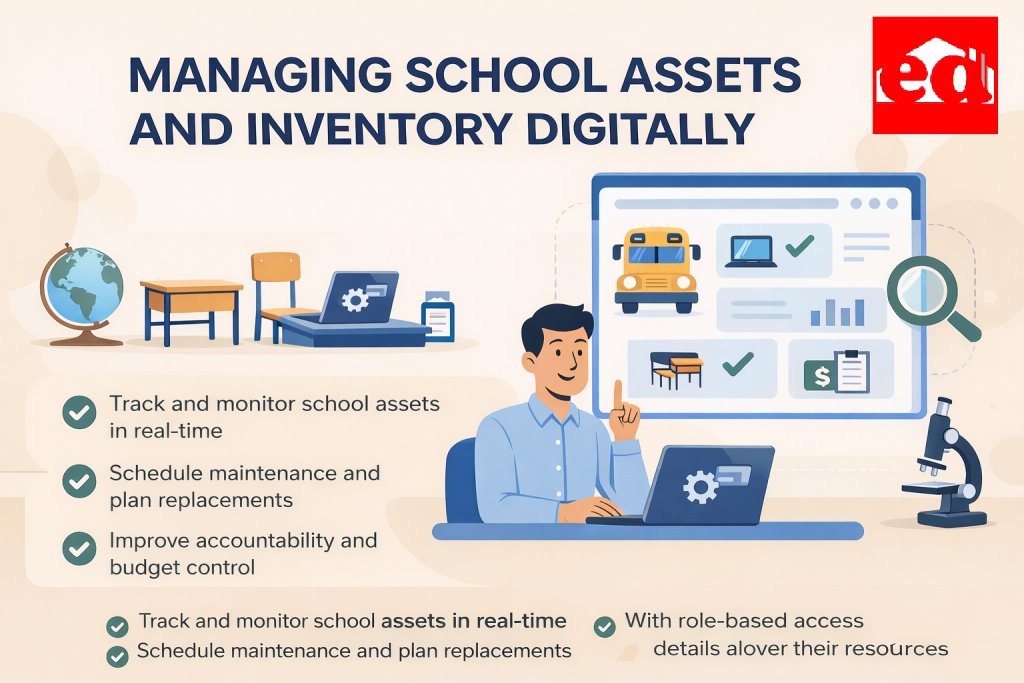
Digital asset and inventory management involves using software to record, track, and monitor all physical resources owned by a school. This includes:
- Classroom furniture and equipment
- ICT devices (computers, tablets, projectors)
- Laboratory and workshop tools
- Vehicles and transport assets
- Sports and extracurricular equipment
Instead of manual record-keeping, all asset data is stored securely in a centralized system that can be accessed anytime.
Common Challenges with Manual Asset Management
Schools that rely on manual systems often face issues such as:
- Missing or unaccounted-for items
- Duplicate or outdated records
- Difficulty tracking asset location or usage
- Poor maintenance scheduling
- Lack of accountability
These challenges not only waste time but also lead to unnecessary replacement costs and budget overruns.
How Edcrib Simplifies Asset and Inventory Management
Edcrib provides a digital, structured approach to managing school assets efficiently.
1. Centralized Asset Register
All school assets are recorded in a single system with details such as purchase date, category, condition, location, and assigned personnel. Administrators can instantly search and retrieve asset records without digging through files.
2. Real-Time Tracking and Updates
Whenever an asset is assigned, transferred, or retired, the system is updated in real time. This ensures accurate records and reduces disputes or confusion over ownership and responsibility.
3. Improved Accountability
With clear assignment records, staff members become accountable for assets under their care. This transparency discourages misuse and improves overall asset handling.
4. Maintenance and Replacement Planning
Digital records make it easier to monitor asset condition and schedule maintenance. Schools can identify aging equipment early and plan replacements proactively—saving money in the long run.
5. Better Budget Control
Knowing exactly what assets you have—and their condition—helps school leaders make smarter purchasing decisions. Edcrib prevents unnecessary duplication and supports data-driven budgeting.
6. Secure Access and Role-Based Permissions
Only authorized users can view or modify asset records. With role-based access, Edcrib ensures sensitive information is protected while still being accessible to the right personnel.
Why Digital Inventory Management Matters for Modern Schools
As schools grow and expand—sometimes across multiple campuses—manual asset tracking becomes unsustainable. Digital inventory management supports scalability, transparency, and operational efficiency.
By integrating asset management into a broader school management system like Edcrib, schools create a unified digital environment where academics, administration, finance, and operations work seamlessly together.
Conclusion
Managing school assets digitally is no longer a luxury—it’s a necessity. With Edcrib, schools can eliminate guesswork, reduce losses, and maintain full control over their resources with minimal effort.
A well-managed inventory leads to smoother operations, better financial planning, and a more organized learning environment—allowing schools to focus on what truly matters: delivering quality education.
- January, 2026

Happy Holidays from Edcrib!
Dear Valued Edcrib Partner, Here’s an Important Update on Future Pricing The Edcrib team ...
- December, 2025
Managing School Assets and Inventory Digitally
From classroom furniture and laboratory equipment to laptops, buses, and sports gear, schools rely ...

Best Practices for Configuring Your School’s Management System
Configuring a school management system the right way is critical for achieving efficiency, ...
No Comments yet!